
Termites cause billions of dollars in property damage each year, and most homeowners only discover the problem after the colony has grown. Once termites invade, the clock starts ticking. You need a solution that is both effective and reliable, which means selecting the right residential termite control company becomes one of the most important decisions you can make for your home.
This guide walks you through everything you should know before hiring a pest professional. You will learn what qualifications matter, how inspections work, what treatment options are available, and how to compare companies with confidence. The goal is to help you make an informed, low-stress decision so your home stays protected for the long term.
Why Choosing the Right Company Matters
Termite damage is unique. You rarely see the insects until the structure has already been compromised. Even a small colony can weaken load-bearing wood, ruin flooring, and damage wall framing. Repair costs can climb quickly, and insurance rarely covers them.
A skilled residential termite control company does more than apply chemicals. It assesses the entire property, identifies the species, selects proper treatments, and provides follow-up inspections. A poorly trained or careless provider may overlook key areas, recommend the wrong approach, or fail to eliminate the full colony. Choosing the right partner protects your home, saves money, and reduces the chance of repeat infestations.
What to Look for Before You Call
Licensing and Credentials
Every reputable company must hold proper state licenses to perform termite inspections and treatments. These credentials show the company met regulatory requirements and follows industry standards. When you speak with a provider, ask for their license number and verify it through your state’s pest control regulatory agency. This takes only a few minutes and helps you avoid unqualified operators.
Professional affiliations also matter. Memberships in recognized industry associations show that a company invests in continuing education and follows best practices. Technicians who hold certifications in termite management or structural pest control have completed additional training. While these credentials do not guarantee perfect service, they increase the likelihood that the company follows safe and effective procedures.
Insurance and Bonding
A reliable residential termite control company carries liability insurance and workers compensation insurance. Liability coverage protects you if the treatment accidentally damages your property. Workers compensation ensures you are not responsible if a technician is injured while working in your home.
Bonding offers extra assurance. A bonded company has a financial guarantee in place to protect customers from fraudulent or negligent work. Before signing a contract, ask for proof of insurance and bonding. Companies that hesitate or make excuses are not worth the risk.
Understanding Termite Inspections
What an Inspection Should Include
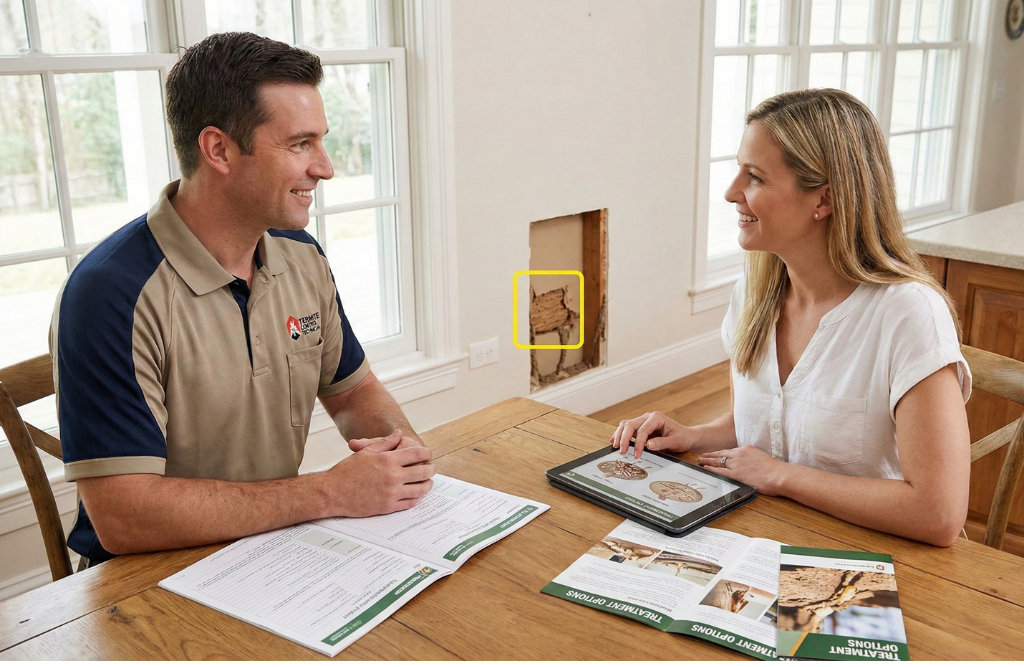
A professional inspection is the foundation of any treatment plan. It should be thorough and methodical. Inspectors examine the exterior, crawlspace, attic, basement, and interior rooms. They look for mud tubes, frass, damaged wood, moisture problems, and entry points. They may also use moisture meters or other tools that detect hidden activity.
The company should provide a written report with photos, notes, and clear recommendations. A weak inspection often leads to incomplete treatment, so do not rush this step. If an inspector seems hurried, skips large areas, or avoids your questions, consider it a red flag.
Questions to Ask During the Inspection
A good inspection is a chance to learn. Ask the inspector to explain what type of termites are present, how severe the infestation is, and what factors attracted them. Understanding the cause helps you prevent future problems. You can also ask whether there is structural damage that requires repair, what treatment options are available, and how long results will take.
A trustworthy residential termite control company encourages you to ask questions and offers straightforward answers. If the inspector brushes you off or uses vague language, you may want to continue your search.
Comparing Termite Treatment Options
Liquid Barrier Treatments
Liquid termiticides are among the most common treatment methods. Technicians apply the product in the soil around your foundation to create a continuous barrier. Termites that pass through it either die or transfer the product to other colony members. When installed properly, a liquid barrier can protect a home for years.
Liquid treatments require precision. The soil must be treated at consistent depths and volumes, and technicians may need to drill through slabs or concrete patios to reach critical areas. A company with experienced applicators is essential for this method to work.
Baiting Systems
Bait stations are placed around the property. Termites feed on the bait and carry it back to the colony, which eventually collapses. Baiting is often preferred for homes where drilling or trenching would be difficult.
This method requires ongoing monitoring. The company must return regularly to check and maintain the stations. If you choose a baiting system, ask how often the technician will return and whether the visits are included in the service agreement.
Wood Treatments and Borates
Borate-based treatments are used to protect wood during construction or repair. These products penetrate the wood and prevent termites from feeding on it. While they are not always a standalone solution for active infestations, they offer added protection when combined with other methods.
Choosing the Right Treatment for Your Home
Your inspection report should outline which methods fit your situation. The best choice depends on termite species, soil conditions, home design, and severity of the infestation. A credible residential termite control company explains the pros and cons of each option and recommends solutions based on your needs, not on upselling.
Understanding Pricing and Contracts
How Termite Treatment Costs Are Calculated
Costs vary by home size, treatment type, and severity of infestation. Liquid treatments are usually priced by linear footage around the foundation. Bait systems may be priced per station or per year. Wood treatments and supplemental services add to the final amount.
Be wary of unusually low quotes. Cut-rate companies often skip steps, use substandard products, or employ poorly trained technicians. A fair price reflects the time, labor, and materials required for effective termite control.
What a Good Contract Should Include
A clear contract protects both you and the company. It should describe the treatment method, chemicals used, areas covered, cost, and follow-up schedule. If the company offers a warranty, the contract should spell out what it covers and how long it lasts. Avoid signing anything that contains vague language or missing details.
Warranties and Follow-Up Care
Why Warranties Matter
Termite control is not a one-time effort. Even after a successful treatment, environmental conditions and nearby colonies can contribute to future activity. A warranty provides peace of mind and financial protection. Most warranties include annual inspections to ensure the treatment remains effective.
Types of Warranties
Some companies offer retreat-only warranties, which cover the cost of additional treatments if termites return. Others provide damage repair warranties, which cover the cost of fixing new termite damage. Damage repair warranties are valuable but also more expensive. Read the terms carefully so you understand what is included and what is not.
Importance of Follow-Up Inspections
Annual inspections allow technicians to catch early signs of activity and ensure the treatment remains intact. Baiting systems require even more frequent visits. A reputable residential termite control company schedules these visits automatically and keeps clear records.
Researching Reputation and Customer Experience
Researching Reputation and Customer Experience
Why Online Reviews Still Matter
Online reviews provide insight into how a company treats customers. Look for patterns rather than individual comments. Consistent complaints about missed appointments, poor communication, or ineffective treatments should give you pause. Consistent praise for professionalism and results is a strong indicator of reliability.
Checking Local References
Ask the company for local references. Speaking directly with past customers can give you a better sense of how the company performs once the contract is signed. You can ask whether the technicians were punctual, whether the treatment solved the problem, and whether the company honored its warranty.
Evaluating Customer Support
Pay attention to how the company handles your first call. A knowledgeable representative should be able to explain the inspection process, treatment options, and basic pricing. Companies with disorganized or rushed communication often deliver the same level of service in the field.
Preparing for the Treatment Process
What to Expect Before Treatment
The company may ask you to move furniture away from walls, clear access to crawlspaces, and unlock gates. If you have pets, you may need to secure them during the visit. These steps help the team work efficiently and safely.
What Happens During Treatment
The treatment process varies depending on the method. Liquid applications involve trenching the soil and applying termiticide. Baiting systems involve placing and labeling stations around the property. Wood treatments involve applying products to exposed framing.
Technicians should explain the steps before they begin and provide updates throughout the process. You should never feel uncertain about what is being done in your home.
Post-Treatment Guidance
The company should tell you what to expect after treatment and how long results take. Signs of termite activity may persist briefly as the colony declines, especially with baiting systems. Ask for written instructions and keep them with your inspection reports.
Signs of a Company You Should Avoid
Even if a company seems appealing, certain warning signs should make you cautious:
- High-pressure sales tactics
- Quotes that are far lower than competitors
- Technicians who cannot answer basic questions
- Lack of written reports or contracts
- No license or outdated credentials
- Poor or inconsistent reviews
- Unwillingness to discuss treatment details
Trust your instincts. If something feels off, get another estimate.
How to Compare Multiple Companies
Collect at least three inspections and quotes. Compare each company based on:
- Thoroughness of the inspection
- Clarity of the treatment plan
- Experience and certifications of technicians
- Quality of customer support
- Strength of warranty
- Long-term value, not just price
Make notes after each visit so you can compare details accurately. A careful review helps you see differences in quality that may not be obvious at first.
Long-Term Prevention Tips
Choosing the right company is only part of protecting your home. You can reduce your risk of reinfestation by managing moisture, eliminating wood-to-soil contact, fixing leaks, maintaining proper ventilation, and keeping firewood away from the house. Your provider should offer specific tips tailored to your home’s design.
Conclusion
Selecting a residential termite control company is a decision that deserves careful thought. The right provider brings expertise, dependable treatment options, and a commitment to long-term protection. Start by verifying licenses and insurance, then focus on inspection quality, treatment methods, pricing transparency, and warranties. When you understand each step of the process, you can choose with confidence and protect your home for years to come.
If you take your time, ask the right questions, and compare companies fairly, you will find a partner who can manage the problem quickly and help prevent future damage. Your home is one of your most important investments, and a dependable termite professional plays a vital role in keeping it safe.
Recent Comments